The No. 1 Sign There Are Mice in Your Home, Experts Say

Emily Ross
Published Feb 23, 2026
Homes may come in all shapes and sizes, but their most important function is to provide you and your loved ones with shelter. Unfortunately, they can also become housing for unwanted guests that make their way indoors, including rodents. Even going above and beyond to make your house less inviting to pests can still result in the occasional invasion. If you're worried that you may have mice in your home, experts say there's one piece of evidence that could prove they're there. Read on to see which rodent red flags could mean you're dealing with an infestation.
READ THIS NEXT: If You're Not Cleaning This, You're Inviting Mice Into Your Home.
Mice can find their way into your home in many ways.
Despite all the advances in technology over the centuries, humans have been trying in vain to keep rodents out of their homes since the beginning of recorded history. But unfortunately, pests have managed to remain crafty opponents—and are more than just an unwanted nuisance around the house. "Having a rodent infestation can be serious because of the potential diseases mice and rats carry," Ron Hodgkins of Bel-O Pest Solutions warns.
According to experts, pests find many ways to get inside your house when they're in search of warmth and something to eat. "Mice can enter your home through the smallest cracks and crevices," Brian Olson from the bugman tells Best Life. "If there is a gap that is even less than 2 centimeters [.79 inches], they have the ability to squeeze through. If there are two main contributors that attract rodents, it would be food and shelter. They will look for these two things by entering your home through walls, cracks in the foundation, and even through your attic."
While small openings may be problems that homeowners can eventually patch up, experts warn they can also use pet doors, air conditioner units, attic vents, and even the space between plumbing or gas pipes and their connection point through your exterior wall to get inside.
You may be able to spot one obvious sign of mice activity thanks to something they leave behind.
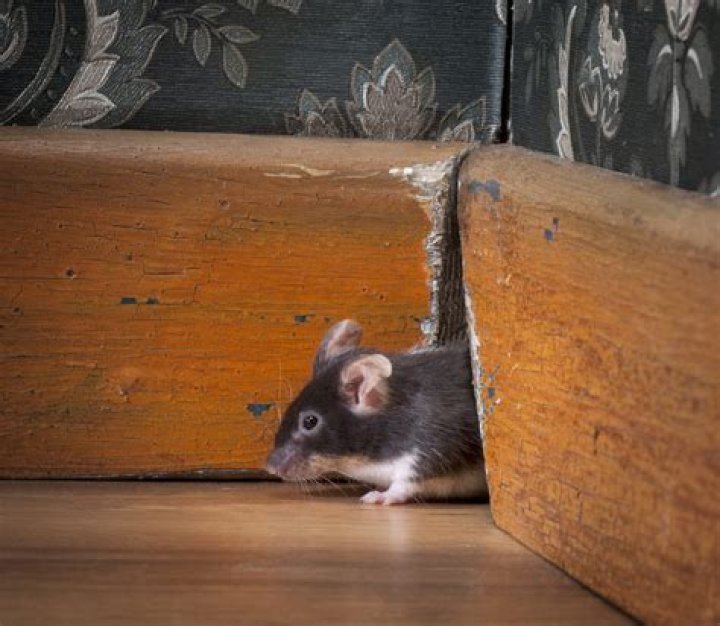
Mice may be quiet animals by nature, but their presence can still be hard to ignore. According to Altek Midlands Environmental Services in the U.K., one of the first signs can be the appearance of grease marks and lines along baseboards left behind by the rodents scurrying along the wall and rubbing against them. Essentially, the smears are signs of a mouse highway running through your house.
"Mice don't have great eyesight, so they typically travel along walls," Megan Cavanaugh, one of the owners of Done Right Pest Solutions, previously told Best Life. "Over time, their oils build up on your walls and baseboards."
Even more telling may be the excrement they leave behind on their routes over time. "Look in areas around your baseboards or near cluttered areas for droppings around 5 millimeters in size," Olson advises.
RELATED:For more up-to-date information, sign up for our daily newsletter.
Your furry friends might be able to detect a mouse problem before you do.
Most pet owners spend enough time with their four-legged companions to know what their normal behavior is like. So if you ever notice your cat or dog acting strangely, it may be because they've detected rodent activity before you have.
"One major sign of mice in your home is unusual pet activity," Ken Unger of Suburban Pest Control tells Best Life. "Dogs and cats have hypersensitive hearing, so if they are scratching or going crazy at certain spots in the house, you may have a mouse infestation on your hands."
Your nose may also be able to pick up on other clues that mice have made their way inside your home.
Sometimes, before your eyes can notice a problem, your nose can pick up the sign that something is wrong in your home. Experts warn that one of the first things that may tip you off to a rodent infestation could be an offense to your nostrils.
"A sign of mice in your home is having an unpleasant odor coming from hidden or difficult to reach places in your home," Peter McDonald of The Turf Doctor tells Best Life. "Mice frequently urinate, leaving the smell to linger throughout your home."
According to experts, the smell of mouse urine is often a stale or musky scent. "The presence of mice may give off an ammonia-like smell, which is a very strong urine smell. This will be particularly obvious in more enclosed areas such as in cupboards or ovens," Nancy Troyano, PhD, a board-certified entomologist with Ehrlich Pest Control, tells Best Life.
READ THIS NEXT: 6 Plants Attracting Mice to Your Home.
Zachary Mack Zach is a freelance writer specializing in beer, wine, food, spirits, and travel. He is based in Manhattan.Read moreFiled UnderAnimals • Home • News • PestsRead This Next6 Ways Mice Are Getting Into Your Home
Experts point out how rodents can sneak their way into your living space.May 6, 2022The Smart Man's Guide to Spotting Counterfeit Wine
That $2,000 bottle of Bourdeaux might be worth $20. Here’s how to be sure it’s the real thing.April 13, 2017The 5 Best Light-Bodied Red Wines for Extending Your Summer
Don't let September ruin a killer party. August 25, 201717 Insanely Cool New Luxury Bicycles for Spring
Meet the bikes that cost more than a car.March 31, 2017Best Life Essentials
You deserve the best. Live life to the fullest with these ultimate essentials.October 21, 2016This Is the Safest Way to Store Meat
Don't let that filet set you up for food poisoning. February 7, 2018Here Are the 10 Wealthiest Cryptocurrency Millionaires Under 40
Including one guy who is only 24 years-old!February 7, 2018This Is the Safest Way to Clean Your Floors
Keep your floors clean and looking brand new with this easy tip. February 8, 201815 Things Your Real Estate Agent Won't Tell You
These are sure to shock even the most intrepid homebuyers. February 14, 201820 Financial Decisions You're Guaranteed to Regret
The experts have spoken: It's time to start saving for your future.March 9, 2018