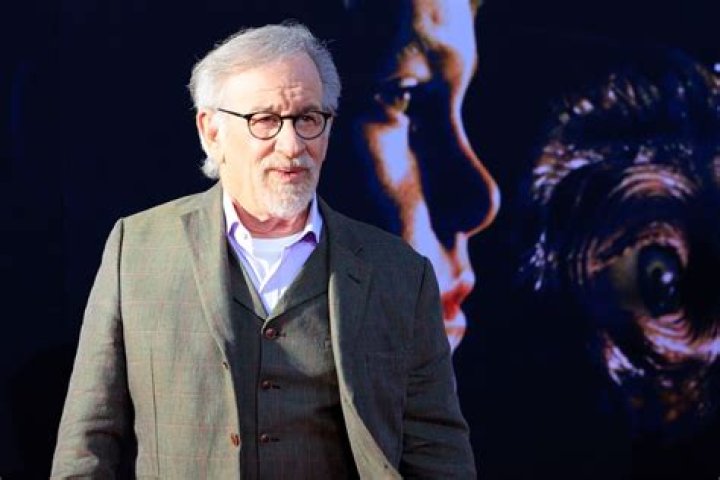
Steven Spielberg Admits Iconic Movie Had a Negative Impact: "I Really, Truly Regret That."

Emma Horne
Published Feb 23, 2026
Steven Spielberg has directed a number of iconic movies during his career, from E.T. to Indiana Jones to Jurassic Park. But, there's one famous movie from his filmography about which he has a very particular regret. In 1975, Spielberg's film Jaws, a thriller about the hunt for a great white shark attacking citizens of a New England town, was released and went on to be a major hit. But while the movie was a huge success in every way and is still considered a classic today, there's a lingering effect from the film that the filmmaker said in a new interview he still regrets. Read on to find out more.
READ THIS NEXT: 7 Classic Movies That You Can't Watch Anywhere.
Jaws was a box office and critical hit.
Jaws is based on the 1974 book of the same name by Peter Benchley. The movie was a massive hit when it was released in 1975 and is considered to be the first blockbuster movie. It was also critically acclaimed and awarded a variety of honors, including a nomination for Best Picture at the Academy Awards. It was followed up by three sequels and is now considered to be one of the greatest movies of all time.
Spielberg admitted that he's worry for one aspect of the film's legacy.
The threat of Jaws' deadly shark stuck with a portion of the movie's large audience. Some were inspired to hunt sharks themselves and many others were given a misperception of sharks and their behavior. Spielberg regrets his role in this cultural phenomenon.
The director was the guest on the Dec. 18 episode of BBC Radio 4's Desert Island Discs, a show in which interviewees share the eight songs they'd want to listen to if stranded on a desert island. In the interview, Spielberg was asked how he would feel if his fictional desert island was surrounded by sharks.
"That's one of the things I still fear," he said. "Not to get eaten by a shark, but that sharks are somehow mad at me for the feeding frenzy of crazy sport fishermen that happened after 1975."
He continued, "I truly and to this day regret the decimation of the shark population because of the book and the film. I really, truly regret that."
For more celebrity news delivered right to your inbox, sign up for our daily newsletter.
The movie (and book) indirectly led to a decline in the shark population.
As Spielberg noted, the release of Jaws is said to have contributed to the decline in the shark population, as well as contributing to people's fear of sharks, which has been called "The Jaws Effect." Some viewers walked away from the movie believing that sharks could be vengeful and seek out humans to kill.
In 2015, Oliver Crimmen from London's Natural History Museum told the BBC, "Jaws was a turning point for great white sharks. I actually saw a big change happen in the public and scientific perception of sharks when Peter Benchley's book Jaws was published and then subsequently made into a film."
George Burgess, director of the Florida Program for Shark Research, told BBC, "A collective testosterone rush certainly swept through the east coast of the US. Thousands of fishers set out to catch trophy sharks after seeing Jaws." Burgess added, "You didn't have to have a fancy boat or gear—an average Joe could catch big fish, and there was no remorse, since there was this mindset that they were man-killers."
That said, the BBC article notes that while shark populations declined greatly in the years after the release of Jaws, sport hunting would only have been a small part problem with the bigger issue being commercial fishing.
The author of the book spoke out, too.
Benchley, who died in 2006, also expressed regret about the novel's influence on readers' feelings about sharks.
"What I now know, which wasn't known when I wrote Jaws, is that there is no such thing as a rogue shark which develops a taste for human flesh. No one appreciates how vulnerable they are to destruction," he told Animal Attack Files (via Boston.com).
Benchley went on to become an ocean conservationist.
Lia Beck Lia Beck is a writer living in Richmond, Virginia. In addition to Best Life, she has written for Refinery29, Bustle, Hello Giggles, InStyle, and more.Read moreFiled Under1970s • Animals • Celebrities • Entertainment • NewsRead This NextSteven Spielberg Lost $100 Million in Divorce
His 1989 split from actor Amy Irving would prove to be costly.December 16, 2022Julia Roberts & Spielberg's Forgotten Feud
The actor and the director reportedly clashed on the set of 1991's <em>Hook</em>.June 18, 2022Steven Spielberg's Daughter Opens Up About Nepotism
Destry Allyn Spielberg became a topic of conversation when her new film was announced.July 29, 202110 Things You Didn't Know about Justin Trudeau
Athlete, nerd, hopeless romantic, thespian. Yes, there’s a lot more to Canada’s Prime Minister than just politics.March 21, 2017Jon Hamm: The Best Life Interview
Jon Hamm, star of TV's Mad Men, reveals the secrets of manliness in a postmodern world.November 15, 2016Driving Tips Smart Men Know
Ten easy ways to be the safest driver on the road. April 3, 2017Men Who Set the Time: Cash Warren
The successful producer, entrepreneur and husband of Jessica Alba reveals how you, too, can live your best life.October 31, 2016Dr. Oz: The Best Life Interview
Mehmet Oz, M.D., asks the toughest question: Are you living or dying?October 23, 2016Dr. Oz's 15 Best Life Tips
October 23, 2016The One That Got Away
A single nutrient—omega-3 fatty acids—may have turned early humans into civilized man. Has stripping it from our diet given rise to cancer, diabetes, and other civilized diseases? Our correspondent investigates.February 23, 2017